|
|
HOW DO I MAKE THIS LONG STORY SHORT?
I was born on our family farm near Sifton, MB on Sept. 30, 1939. My older brother Ernie, (Reg.#18351) joined the Force in September 1953 and from then on, he was my role model. On my 18th birthday in 1957, I took my recruitment exam and was “sworn in” on February 5, 1958 at “D” Division HQ in Winnipeg, MB. I travelled by train to “N” Division Ottawa, ON to commence training.
Some training highlights:
3/Cst. Norman D. Inkster, who just completed training, was appointed our “Troop Leader” for 3 months. He served as RCMP Commissioner from 1987 to 1994.
Our troop augmented security during USA President Dwight Eisenhower’s visit to Ottawa, ON July 7-11, 1958.
Prior to our final pass out (graduation), we were advised of our Division Postings. Troopmate Garry Stewart and I reported to a Personnel Sergeant at “F” Division HQ Regina, SK.
By way of a “coin toss” Garry went to Prince Albert, SK Detachment, and I went to Saskatoon, SK Detachment. Less than 2 months later, with 15 hours’ notice I was transferred to Watrous, SK Detachment on December 31, 1958. Happy New Year!
On March 31, 1960, I took a voluntary hiatus from the Force and was re-engaged on March 13, 1961, posted to “E” Division, Penticton, BC Detachment.
After 7 years of General Duties in “F” and “E” Divisions, in October 1966 I was transferred to plainclothes duties (GIS) in the lower mainland of BC and was promoted to Cpl. In 1971 I was selected to go to the National Training Centre for Lie Detection in New York City, followed by in-service training with the Michigan State Police Polygraph members. I returned to Vancouver, BC S/Division and joined Les Holmes there and Gene Smith in Regina, SK. The program grew and I was promoted to Sgt., then S/Sgt. as Senior Polygraphist. I frequently instructed in-service training classes on interviewing and interrogation techniques.
In 1976 I was promoted to the rank of Inspector and transferred to Regina, SK. in charge of the Planning Branch and Audit Team for “F” Division.
Two years later I returned to Vancouver, BC in charge of Internal Investigations for “E” Division.
A year later I transferred to Burnaby, BC Detachment into the role of Operational Support Officer.
In August 1981, I transferred back to “E” Division HQ, Vancouver, BC in charge of General Investigations – including Serious Crimes. An investigation was underway that resulted in the arrest and subsequent conviction of Clifford Robert Olson for eleven first-degree murders of young children and one adult female. Without doubt, this was the most demanding investigation of my entire career.
The actual investigation into Olson’s activities prior to his arrest and conviction continued for several years, however his cryptic references to “other victims” could not be substantiated.
Two years later, I was appointed Assistant Officer, Contract Policing “E” Division.
In May of 1988, I was promoted to Superintendent, as the Officer In Charge Toronto Pearson Airport Detachment.
In early 1989, I was appointed Officer In Charge, Protective Policing “O” Division and promoted to Chief Superintendent.
Later that summer I was appointed RCMP Contingent Commander of 100 members to be seconded to the United Nations Transition Assistance Group UNTAG in Namibia, South West Africa. This was the first time for the RCMP to participate as a civilian police component (CIVPOL) within a United Nations Mission. In less than 2 months, 99 members were selected from approximately 2000 volunteers and suitable tropical uniform articles were procured from the Canadian Military.
On October 19th we departed Canada on our journey to join 1400 other CIVPOL from 23 other countries who were already in theatre.
On arrival I was appointed CIVPOL Chief of Staff at UN HQ in Windhoek, Namibia. The other 99 members were deployed throughout the country to existing CIVPOL locations. A country-wide election was held in November without major incidents.
I chaired a committee that coordinated the recruiting and training of a police service to take over on Independence Day, March 22, 1990.
A massive security operation ensured that the Independence Day Ceremony “The Birth of a Nation” was staged with no major incidents.
Immediately thereafter, most UN personnel departed. I remained for 3 weeks longer to facilitate CIVPOL wind-up before resuming my previous duties. I consider this UN experience another highlight of my career which afforded firsthand superior cross-cultural experience for all contingent members. (See Footnote)
On April 15,1991, I was appointed Officer In Charge Criminal Operations “O” Division. During the next year, plans were finalized, and “O” Division HQ relocated to London, ON from downtown Toronto. Operational units were relocated to Milton, Newmarket and Bowmanville, ON out of the downtown core. Relocation took place during the spring/summer of 1992.
In December 1992, I was appointed Officer Commanding “F” Division, Regina, SK. On December 26th, I departed ON to assume Command in Regina that day and was promoted to Assistant Commissioner. A “Model of Policing Study” was set up by Planning Officer Insp. Mike O’Neil, which included my involvement throughout, as well as a large cross-section of members and civilian employees, followed by focus groups involving all Division personnel. The result was the recommendation to restructure from the Sub Division model to a District model. That recommendation was approved by the Senior Executive Committee of the Force. Federal and Provincial Government approval followed. This was another highlight of my career.
A Commanding Officer’s Aboriginal Advisory Committee was established and First Nations and Metis representatives from all areas in the province were selected.
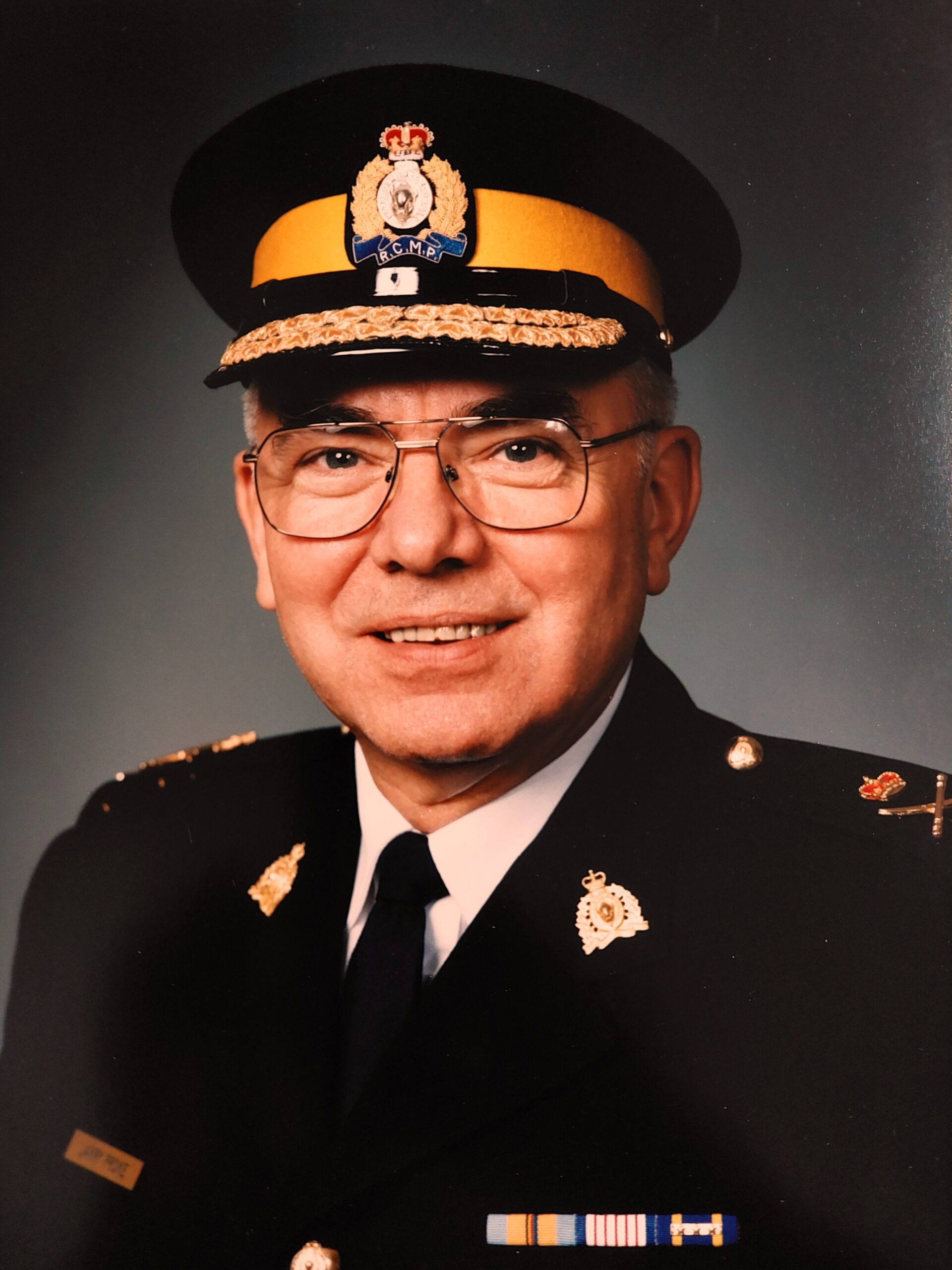
In September 1995, I was appointed Commanding Officer “E” Division, Vancouver, BC and promoted to the rank of Deputy Commissioner. I attended an INTERPOL Conference in Beijing, China, shortly after my arrival. I was tasked to facilitate the restructuring of “E” Division to the approved District Model and to promote implementation of the community policing philosophy Division wide. Many town hall sessions were held to communicate the details and encourage buy in; this endeavor was successful.
Concurrently, the Force-wide initiative to advance this process culminated in a National gathering of stakeholders consisting of a cross section of members and civilian employees, who had gathered input within their Divisions. Facilitated discussions resulted in a strong commitment to the Force-wide implementation. This momentum also resulted in the implementation of a four Region concept nationally: Pacific, Northwest, Central and Maritime, with a Deputy Commissioner at the head of each Region. The successful transition to the early version of Regionalization within the Force was the direct result of a team effort by members and employees.
On July 1, 1996, I was appointed Deputy Commissioner Pacific Region, which encompassed “E” and “M” Divisions.
I became a member of the Senior Executive Committee of the Force and actively participated in all SEC meetings in person, or via video link, as well as many daily 8: 00 AM (Ottawa time) SEC briefings on current and ongoing Canada-wide happenings/issues. The successful transition to the early version of Regionalization within the Force was the direct result of a team effort by members and employees.
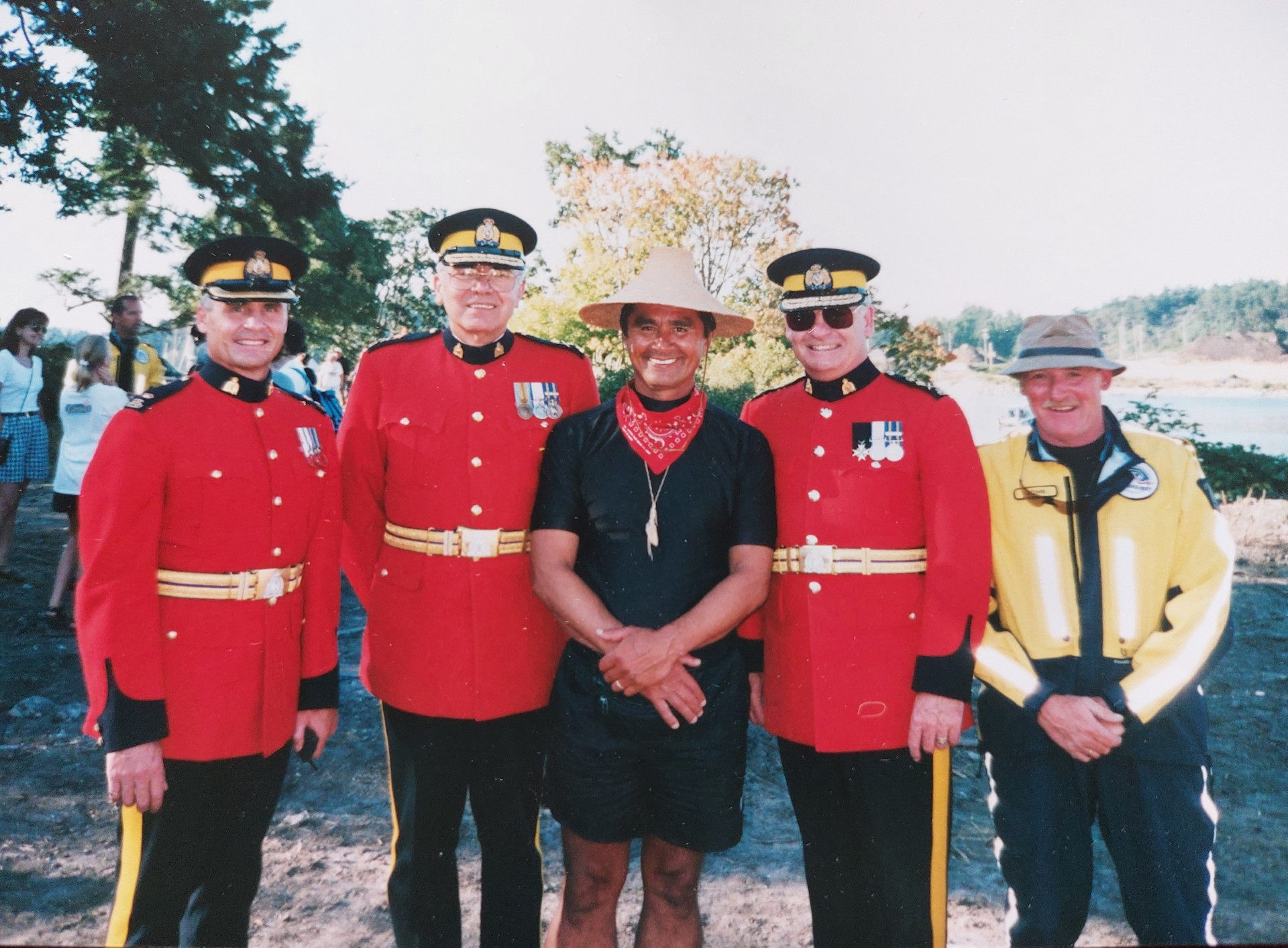
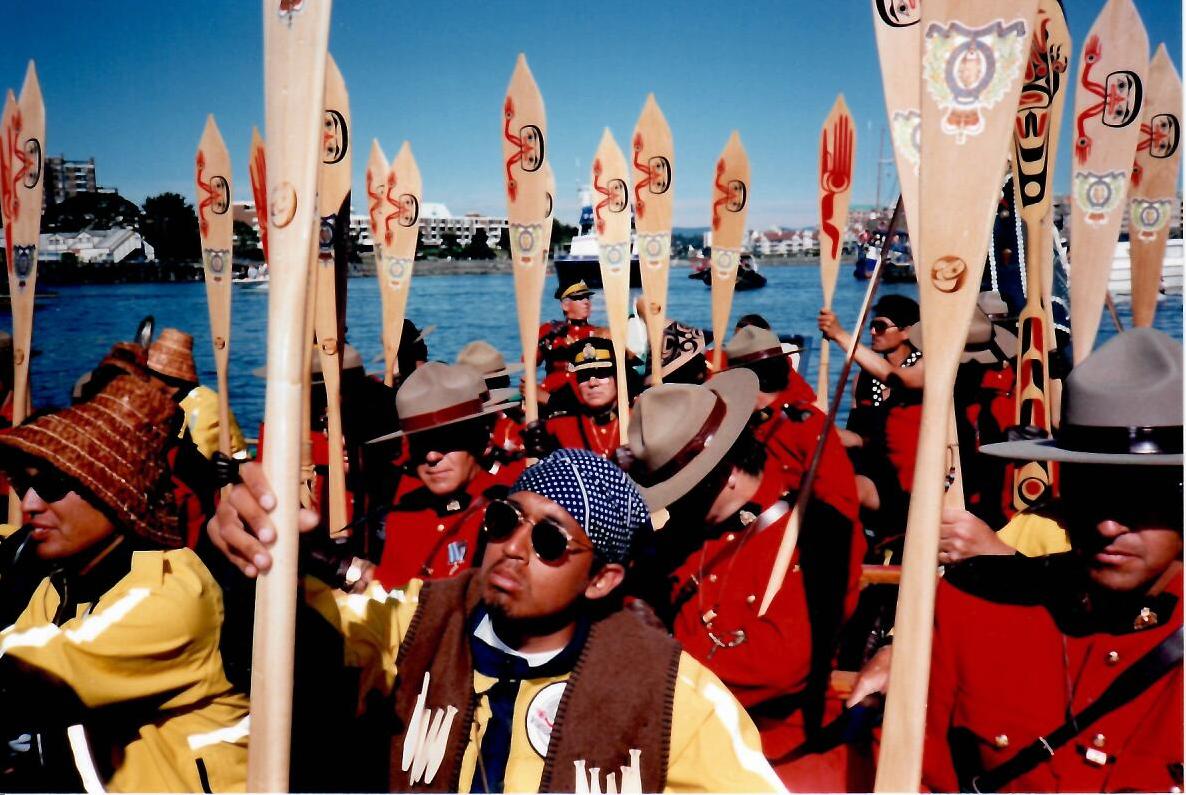
Inspector John Grant, S/Sgt. Ed Hill, and others advanced a proposal for “E” Division to partner with BC First Nations artist Roy Henry Vickers, to raise money for “Vision Quest”, a holistic addiction recovery centre to be established in BC to help people of all walks of life recover from all types of addictions. Musician/producer David Foster joined this venture as a “key to the music industry” to help raise funds. Many other notable people joined “Journeys 97”, a canoe trip from New Hazelton, BC, down the coast to Victoria and ending in Vancouver to be led by Roy Vicker’s canoe and an RCMP canoe followed by others. Along the way stops would be made at numerous First Nations communities to solicit support and contributions. I recommended this proposal to Commissioner Phil Murray and received his wholehearted support and approval. Journeys 97 commenced on July 3, 1997; I was present for the sendoff and attended at 2 evening stops enroute prior to arriving in Victoria on August 3, 1997. The Commissioner and I were present as well as in Vancouver the following day. This endeavor exceeded expectations, resulting in two Recovery Centres being established by their 20th anniversary in 2017. “Our Journey of Healing” between First Nations and the Force region wide took a great step forward. I consider this another career highlight.
Since being promoted to Chief Superintendent in “O” Division, I was an active member of the Provincial Association of Chiefs of Police, The Canadian Association of Chiefs of Police and The International Association of Chiefs of Police. On September 8th I participated in my final Change of Command ceremony.
I am most grateful for the outstanding support I received from my immediate family throughout my career. Their steadfast love and encouragement “kept me going”. Coupled with this, I had the pleasure of working with incredibly talented women and men for all those years in a team effort environment. Thank you All!
Upon retirement I joined the Board of Governors, Commissionaires BC, and remained active until stepping down in 2006. Concurrently, I joined the RCMP Veterans’ Association and remain active.
Footnote: Inspector Ben J.S. MAURE, “E” Division, authored a book “Leading at the Edge”, published in 2020 Chapter 1. Birth of a Nation: UNTAG Namibia.
March 23, 2024
|