
COUPLAND, J.L. ((COUPLAND, J.L. (John L.)))
The Gallery
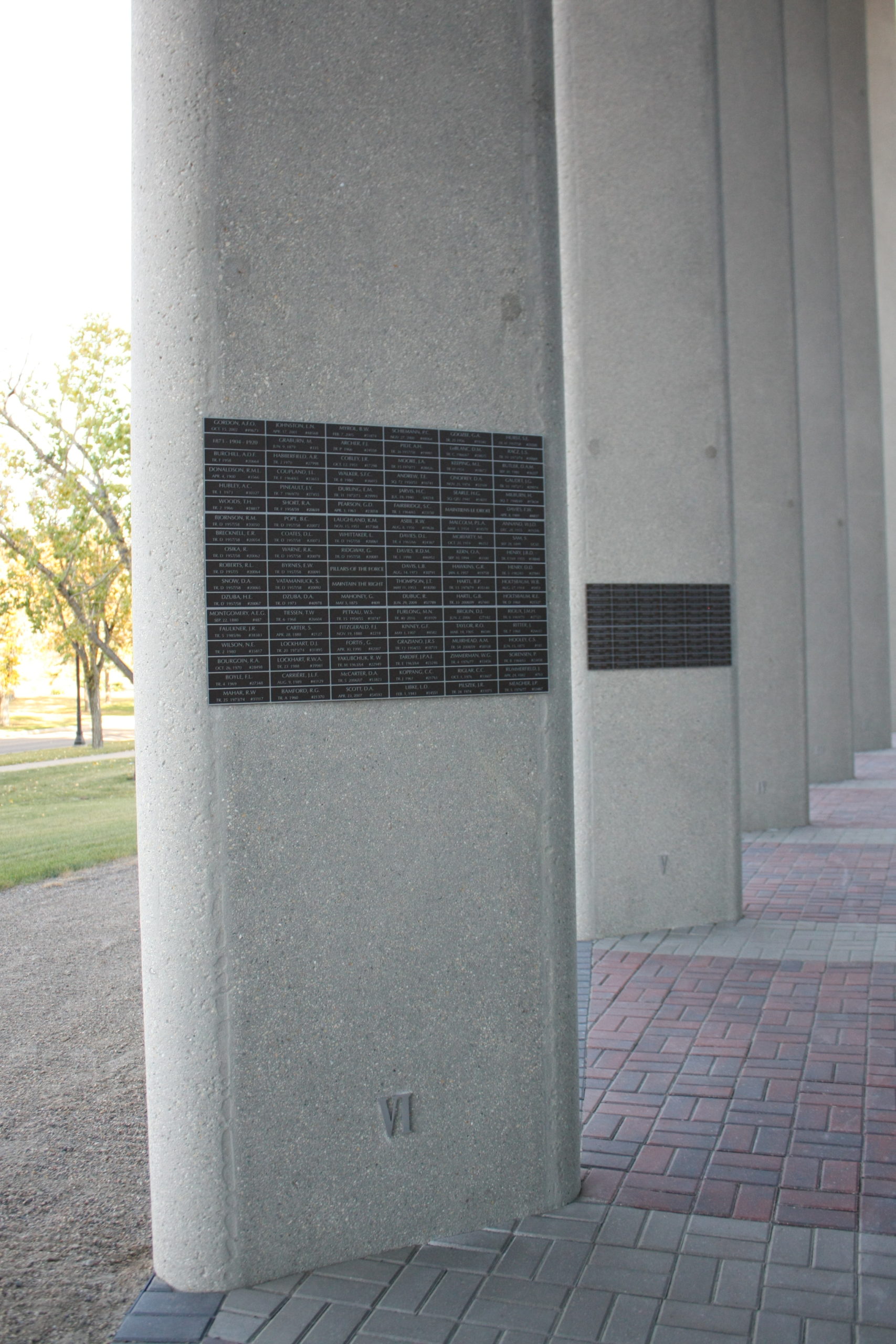
The Nameplates
Pillar Location: Pillar: 06 - VI, Row: 22, Column: B
Troop Number and Year: TR. F 1964/65
Pillar Location: Pillar: 06 - VI, Row:22, Column:B
Troop Number and Year: TR. F 1964/65
The Bricks
Size: 8" X 8"
ID: B00143
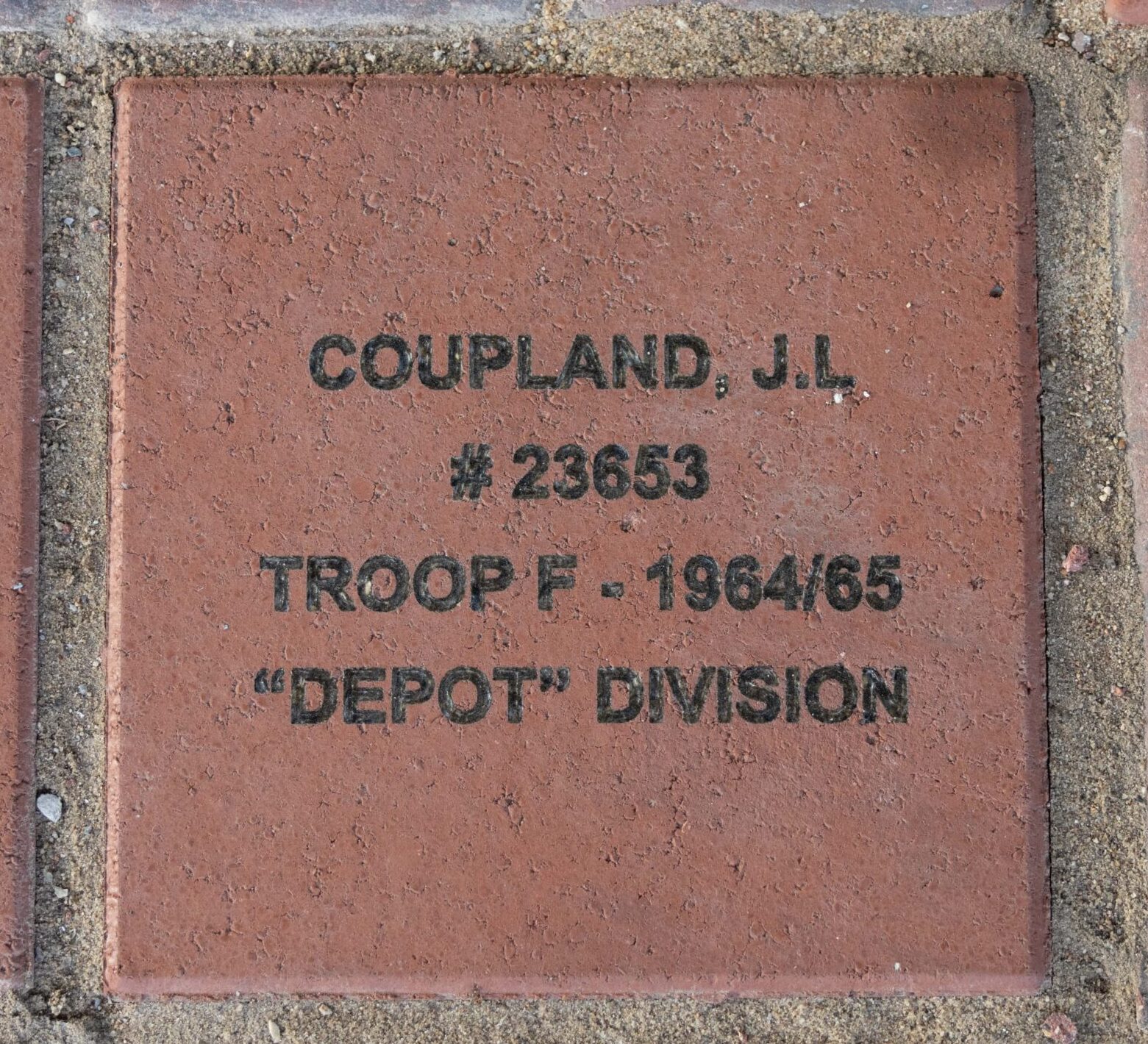
Description: Coupland, J.L.
Virtual: Yes
The Stories
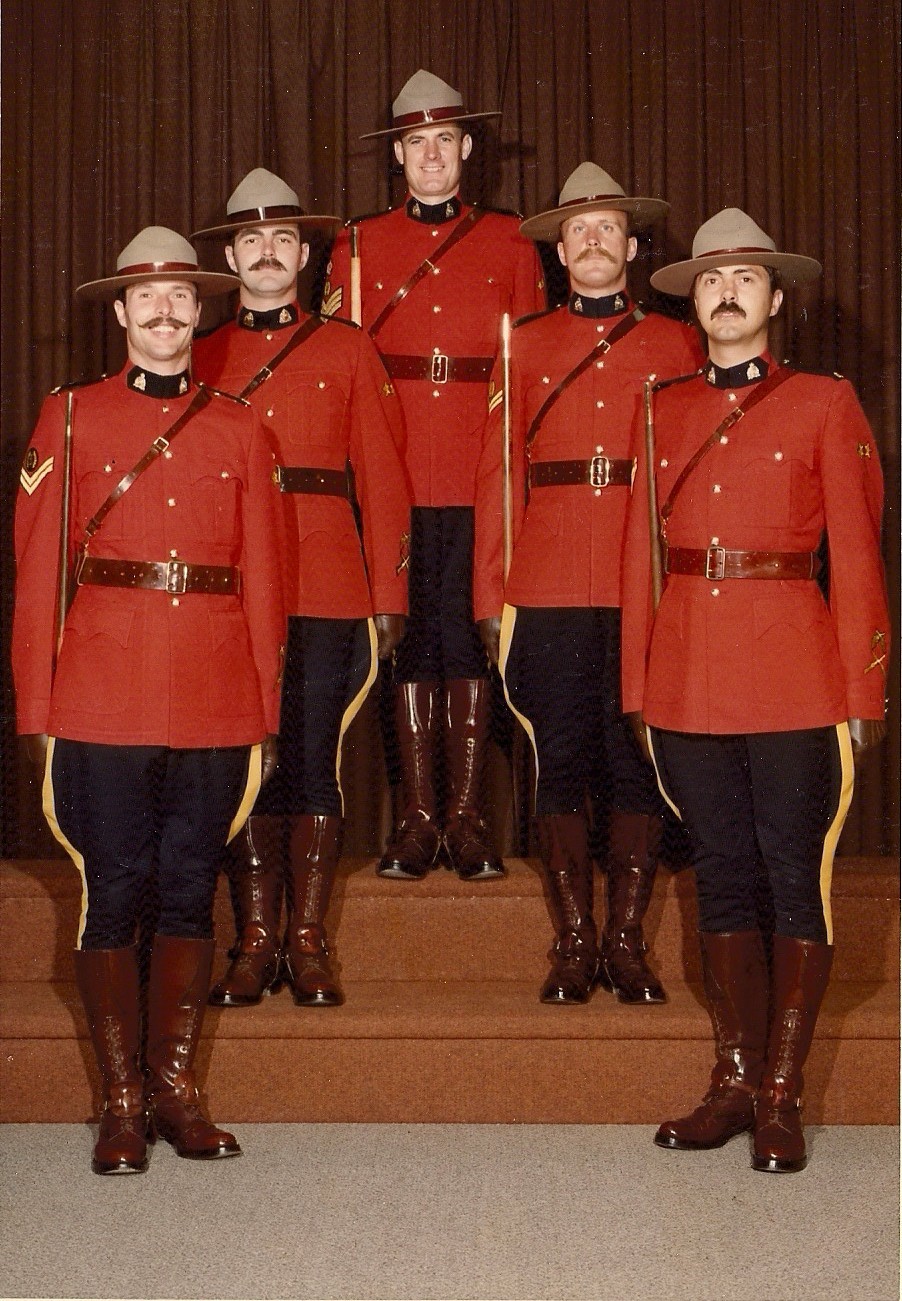
John Coupland, Reg. No. 23653, joined the Force in 1964, and was part of F64/5 troop at Depot Div. in Regina. Training at that time was eight months, and included grooming, cleaning, and riding horses. Other troops were training at the same time in Ottawa. His first posting after graduation was at Dauphin Det. in Manitoba. Two weeks later, he was transferred to Flin Flon Det. on the border of Northern Man. and Sask. Flin Flon was a hard-rock mining town that never slept and the mine had three shifts 24/7.
One and a half years later he was transferred to Winnipeg for eight years including time on the following Plain Clothes Sections - Race Track Detail, Drug Squad, and Customs & Excise Section. Developing informants and conducting surveillance on the C & E Section were key parts of the job. He was also a member of the surveillance team which sometimes involved aircraft surveillance. At times the Winnipeg airport tower would divert commercial aircraft away from their area of surveillance.
Once, they surveilled via aircraft two bank robbers who had come from Montreal. They had a gunsmith file down the firing pins on the suspects' weapons which they shipped by bus. They watched the suspects case banks and on the day of the robbery, surveilled their vehicle to an underground parkade where the robbers reappeared with the getaway vehicle and a stolen one, parking several blocks from the bank. They drove the stolen car to the bank, entered and robbed the bank, and were completely surrounded by the Winnipeg City Police and RCMP. The criminals surrendered without lifting their weapons.
Another interesting case was when they performed surveillance on a top heroin trafficker and owner of illicit stills who met a woman who was disembarking from a train from Montreal. She had heroin taped to the inside of her arms and both were arrested in his car.
While on the Drug Squad, he was called in on a Sunday evening to wear his oldest, dirtiest clothes to do surveillance at the bus depot for a couple of hours. Those hours turned into a three day ordeal as the suspect with a large quantity of heroin was on a cross-Canada bus. The Montreal Drug Squad and a member from the Vancouver Drug Squad followed the suspect from Montreal to Winnipeg on the bus. The Vancouver Drug Squad never made it to Winnipeg on time so they had to follow the suspect west to Calgary. In one car was John, along with a senior member from Vancouver, and a young member from Montreal. A winter storm started west of Regina and the bus driver was seated high enough to see above the drifting snow. When the unmarked police cars passed a vehicle, the driver would have very limited vision. The young member from Montreal was driving and pulled out to pass a semi-trailer that the bus had just passed. For some reason he pulled back and said “Not this time” a couple of seconds before another transport truck came the other way. He then understated “That was a close one”. After that, the surveillance team kept one of their vehicles ahead of the bus and would radio when it was safe to pass.
The Race Track Detail at Assiniboine Downs (horse racing complex) was for two summers and was very interesting. The RCMP at that time was hired by the Federal Department of Agriculture to oversee the betting and distribution of racing money.
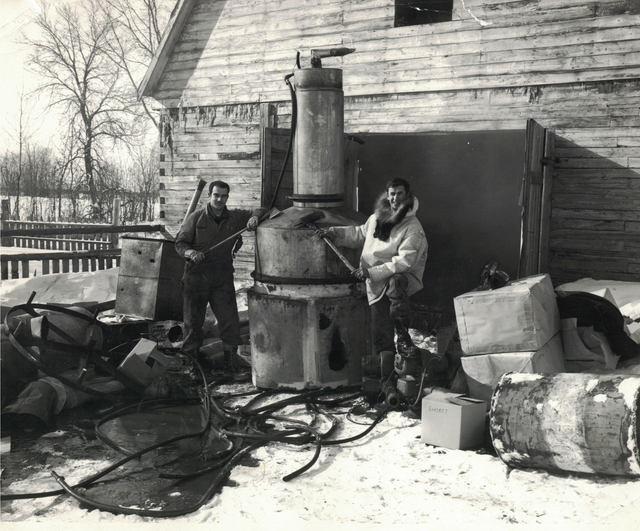
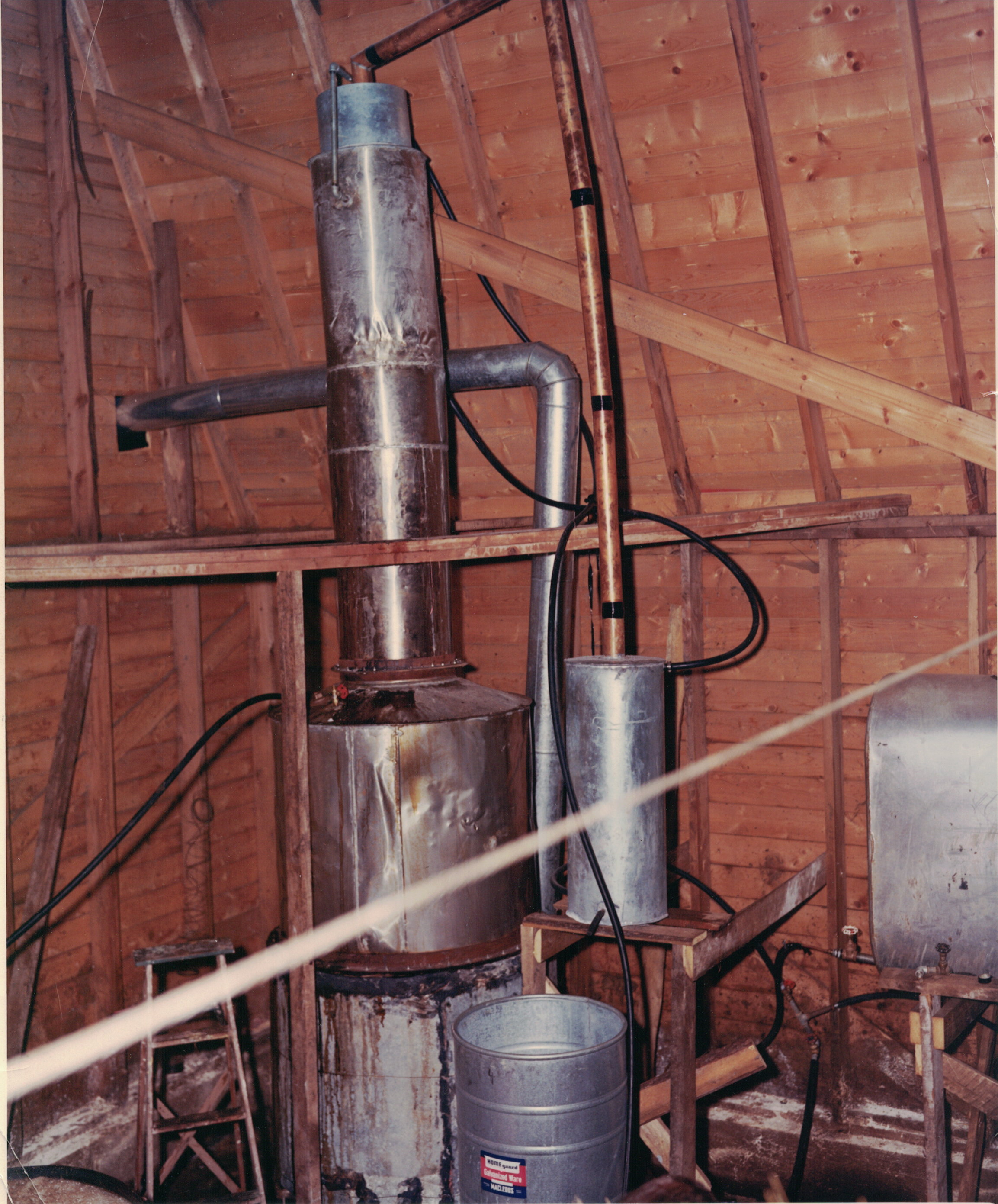
On the C & E Section, John had a very productive time investigating illicit stills and home brew under the Excise Act. He was issued a Writ of Assistance under the Excise Act which allowed the RCMP to search any premise on reasonable and probable grounds. In one year alone, he and his partner Ed Stechly seized an unprecedented six large illicit stills. Each still was approximately three stories in height and had a two hundred and fifty gallon cooker. John and Ed received a letter of Commendation from the Commissioner (see attached photos).
Some of the places the stills were found included a pig barn, a cattle barn, and a house in a brand-new sub-division. One still was located fifty miles east of Winnipeg and the surveillance of the suspect occurred for over one month, which included night surveillance as the suspect only attended the still at night. The suspect drove on back roads and would stop any time vehicle lights were behind him. Because of this, John had to drive at night with no lights on. One night, there was a black object directly in front of the car. Fortunately it was not a moose, and on his return, it turned out to be a large Christmas tree which had fallen off a truck which John and Ed had driven over without damage. One of John's eyelids flickered off and on for about one year from the eye strain he experienced.
One of the best compliments that John ever received was when a co-worker was playing hockey with prisoners from Stoney Mountain Penitentiary and a prisoner (a convicted large-scale heroin trafficker caught by John and Ed at two stills) admitted “You’ll never know what a pain in my side those two were.”
In 1974, he was promoted and transferred to I/c Nipigon Det. for federal policing. Nipigon Det. was still part of “D” Division at that time. Nipigon is on the north shore of Lake Superior. The population was small but the Det. area was huge. On an undercover fly-in fishing trip to enforce sections of the Aeronautics Act including commercial flying without a charter and overloading of an aircraft, he flew in an overloaded float plane whose owner had no charter. On being picked up, the plane arrived in extremely foggy weather, however the pilot / owner commented how safe a pilot he was. After the pilot was charged and summoned to court, he was killed in the plane before his court appearance. During John's off-time he built a log cabin on a remote lake. Fishing and hunting were great.
In 1978, he was promoted and transferred to Selkirk Municipal Det. for seven years. The last six of those years he was also a member of the “D” Division ERT (Emergency Response Team, known in other police forces as a SWAT team). He enjoyed the camaraderie of this tightly-knit group. He also coached minor football and hockey there.
In 1985, he was transferred as the Det. Commander in Thunder Bay. Luckily, he had kept his log cabin near Nipigon, and even added an expansion to it after his transfer. During his time in Thunder Bay, the four “D” Division detachments in North Western Ontario were transferred to “O” Division (Toronto). In order to get promoted, John would have had to be transferred to Southern Ontario where the price of housing was extremely expensive.
The job of Emergency Planner with the Thunder Bay Area Emergency Measures Organization opened up for which he applied, and was accepted. He retired from the Force after 25 years of service.
Duties for the new job included writing the emergency plans and conducting emergency exercises with the City of Thunder Bay and the seventeen outlying municipalities in the District. After ten years, the City of Thunder Bay left the organization and John continued working for the outlying municipalities for seventeen more years. During this time, he also had the RCMP civilian job of Regional Coordinator for Firearms Verification for two years until the Federal Government eliminated those positions. He was also Port Facility Security Officer for five grain elevators at the Port of Thunder Bay following 9/11.
He spent nearly a year working for and in the remote fly-in First Nations communities of Eabametoong (Fort Hope) and Neskantaga (Landsdowne House) during their declared extended emergencies. Fort Hope had approximately sixty B & E’s (youth in trouble), and Landsdowne had seven suicides and twenty seven attempts in a population of three hundred.
In 2016, he retired after fifty-two years of employment, missing only two days of work, none in the last fifty years. At the time of his last retirement, he was diagnosed with ALS (Lou Gehrig’s disease). ALS is a progressive fatal disease with no cure which paralyzes the muscles of the body. For more information, watch the movie “Gleason” on Amazon, a documentary true story of an NFL player who developed ALS.
John enjoyed hunting with his two sons and various hunting buddies. He shot trap, cross-country skied, and took up tennis and golf in his later years.
He was the Chair of the Confederation College Law and Security program, member of the 18th Thunder Bay Service Battalion Senate, founded the Thunder Bay District Critical Incident Stress Team, and was on the executive committees of several other volunteer agencies.
John was the president of the Thunder Bay RCMP Vets Association from 1989 to 2022. He received the Queen’s Silver, Gold, and Diamond Jubilee medals. John was awarded the Governor General’s Caring Canadian Award.
Divisions Served: D, O
Pillar Location: Pillar: 06 - VI, Row: 22, Column: B
Regimental Number: 23653
Training Division: Depot
Troop Number and Year: TR. F 1964/65
Home Town: Granby & Waterloo, QC
Regimental Number: #23653
Troop Number and Year: TR. F 1964/65