
Ten Paces … More or Less
Author: Reed Chevalier
Prologue – Spring 1971
The landscape was draped in a darkness. In the distance, nudging a vague horizon, sparsely spaced lights hinted at the existence of small communities and farms. In recent hours, a fast-moving cold air mass had violently collided with a layer of warm moist air over the west central Saskatchewan prairie. Not uncommon during the spring. The result was a brief but intense thunderstorm accompanied by a heavy downpour of rain. It was 0215 hrs.
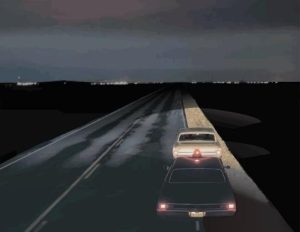 On a dark stretch of provincial highway, one hundred twenty miles south west of the city of Saskatoon and about sixty miles from the nearest RCMP detachment, a black police cruiser was stationary on the gravel shoulder. The highway was a secondary transportation route, one of many which criss-cross the province linking small farming towns to the primary provincial transportation arteries.
Rainwater had pooled on the uneven pavement, reflecting the intermittent red flashing light of the cruiser’s rotating beacon. A motionless beige coloured 1969 Chevy sedan was positioned on the gravel shoulder in front of the cruiser. Moments earlier the police vehicle and the sedan had been traveling south in tandem, then simultaneous with the cruiser’s beacon light’s activation, both vehicles slowed and manoeuvred to the shoulder. The Chevy and its occupants were now illuminated by the cruiser’s headlights. The rain had stopped.
The annoying screech of worn windshield wipers traversing across wet glass could be clearly heard inside the cruiser’s interior.
The constable keyed the radio’s mike.
“Saskatoon Radio, four five seven. Do you copy?”
The constable’s shift had begun at 1800 hours the previous day. He had turned up at the detachment office just prior to the day shift ending when he noticed that his in-basket had a new addition. The dark blue file folder with an “Urgent” label attached, courtesy of the detachment’s sergeant in-charge, contained a subpoena which had to be served within the next three days. It was an unusually short deadline, but not unheard of. The constable was familiar with the intended receiver, a well-known farmer who resided on his family’s grain growing operation located near the southern limit of the detachment’s service area.
It was planting season and for the next few weeks, subsequently the farmer and his crew would be occupied twenty-four hours a day until the seeds were in the ground. For the moment, the constable’s shift looked like it was shaping up to be quiet. Until midnight, his more senior colleague would be covering the office and conducting patrol duties within the town’s boundaries. Expedient service of the subpoena was now a priority. Not wanting to incur the wrath of his sergeant with last-minute scrambling to meet the deadline, the constable decided to execute the subpoena during his current shift. If he hustled, he could be out to the farm, serve the document and be back in time to tackle his growing stack of paperwork before the shift ended.
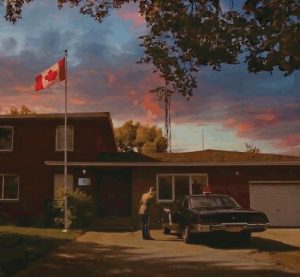 As the constable backed the cruiser out of its parking spot in front of the detachment, the sky was giving way to the twilight of dusk. He drove out of town mentally running through his checklist. Full tank of gas according to the fuel gauge, check. Clipboard and documents on the driver’s seat, check. Ticket book and exhibit tags in the glove box, check. Flashlight and extra C cell batteries in the Haversack on the floor, check. Handcuffs attached to his Sam Brown, check. Twelve extra thirty-eight calibre rounds in the ammo pouch of his Sam Brown, check. Raincoat on the front seat, check. Lastly the radio. If he ran late, he would be the lone officer on duty and there would no one else in the detachment office until day shift. The Saskatoon sub division radio operator would be his sole link to the world. Checking in with the operator was not only protocol, but a smart thing to do. The constable picked up the vehicle’s radio mike fixed to the vehicle’s dash.
“Six seven Saskatoon Radio, Outlook four five seven.”
Radio communication procedures required that the initiating caller first identify the location being contacted. In this case that was the main communications centre, Saskatoon Radio, abbreviated call sign “six seven”. The procedure then required that the caller establish his identity, currently the town of Outlook’s detachment police vehicle, call sign “four five seven”. The sub division radio was manned twenty-four hours a day and typically had the wattage and equipment to reach all of the detachments within the sub division’s geographic area of responsibility. Depending on weather and atmospheric conditions, the radio signals could fluctuate from very good to non-existent.
A response came back.
“Outlook four five seven, six seven Saskatoon Radio.”
After establishing the initial contact between the two locations, the rigidity of the procedures relaxed and a common-practice communication “shorthand” took over.
“Saskatoon, four five seven. Checking reception,” replied the constable.
“You are loud and clear four five seven. Are you just starting your shift?”
“Ten four, on my way out of town. Serving an urgent subpoena.”
“Four five seven, I assume you’re alone?” inquired the radio operator.
“Ten four. Constable Ellis is on town duty until midnight. He’ll transfer the detachment phone to your location after his shift ends. It’s likely that I’ll be out of range. If something urgent comes in after that, please call him at home. He’s on standby until the day shift arrives.”
“Ten four, four five seven. Will do. Make regular contact when you’re able,” instructed the Operator.
“Saskatoon, four five seven, I’ll do my best. You should be aware, when I get close to Lucky Lake, I’ll lose you. It’s a dead zone down there.”
A short pause. The constable had recognized the radio operator’s voice. He was a civilian, very “switched on”, always on top of his game. The ensuing silence made it clear that he was absorbing the constable’s revelation.
“Four five seven, any idea how long you’ll be out of touch?” It was the constable’s turn to pause.
“Uh, maybe an hour or a little more. Have to find the fellow and put the subpoena in his hand. He’s in the middle of seeding and it’s a large farm.”
“Ok four five seven. The clock will be ticking. Make sure you contact me as soon as you are done with the subpoena.”
The constable found the exchange to be reassuring. The operator was keeping tabs.
“Ten four, will do.”
The next few hours of the drive went as expected. Still heading south and shortly after the patrol car passed the last small town, it had turned dark. The constable needed to leave the paved highway and venture onto the network of gravel and dirt roads that interlace the rural spaces of farming country.
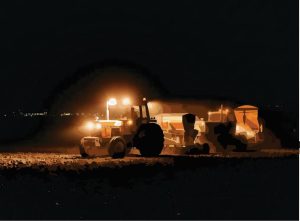 An unpleasant constant of these rural prairie patrols was the dust. Or mud. Tonight, it was the dust that enthusiastically spewed up and out from the rear wheels of the cruiser as the constable searched for the destination farm. There is no such thing as a “dust proof” police vehicle. The fine particles covered everything on the outside and the inside, including the driver. Finally in the distance he could make out a line of lights indicating the location of the farm and the seeding operation’s tractors and trucks. The subject of the subpoena along with his hired hands would be hard at it. The impressively large Case tractor and it’s towed seeding array were operating under blazing over-cab mounted lights. As the constable approached, he knew the farm hands could see the cruiser with its reflective badge insignia on the doors. He also knew they were not about to interrupt their work until it was fitting. Time is precious to these folks and getting seeds in the ground is vital to their existence. The constable would have to wait.
Twenty minutes elapsed before the vehicles stopped to be refueled. The constable followed in the tire tracks of the refueling truck, carefully avoiding any seeded ground. When he was within walking distance of the now stationary lead tractor, he stopped the cruiser and collected the subpoena from the clipboard on passenger seat. Exiting the vehicle, he paused to brush the dust from his brown serge and trousers. A more complete effort would require a trip to the dry cleaner. As he walked towards the tractor, he saw the cab door swing open and a figure step down to ground level. The man was a tall rangy fellow decked out in dark brown heavy cotton overalls, and well-worn work boots with the steel toe caps showing through the leather. The obligatory ball cap complete with a frayed bill and a Coop logo stitched into the crown completed the man’s work apparel. The third-generation farmer was a seasoned, iron-willed steward of prairie farming whose commitment to making a living from the challenging landscape was a life-long responsibility. Niceties weren’t required here, but common courtesy was seldom neglected. The farmer headed towards the police officer, removed his work gloves and stretched out his hand in greeting.
“Evening constable. What brings you out here tonight?”
Straight to the point thought the constable.
“Good evening, John.”
The farmer’s grip was firm and unyielding, true to form and consistent with the work he and his crew were engaged in this night.
“I have a subpoena here and you’re the named recipient. It looks like those two fellows we arrested for stealing your grain auger last winter are going to trial. The crown attorney has decided that he needs your testimony. I apologize for the last-minute notice.“
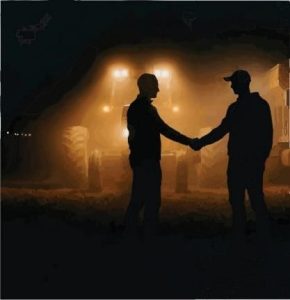 The constable handed him the subpoena. The farmer positioned himself so he could read the print in the beam of the tractor’s lights. He scanned the document quickly, then re-read it slowly. As he finished, with his eyes squinting against the glare, he carefully folded the subpoena in half, and then half again, placing it inside the breast pocket of his overalls. For a moment he stared at the ground, then reached into his side pocket and produced a tin of chewing tobacco. He unscrewed the lid, squeezed a “pinch” of the contents between his thumb and forefinger and inserted the substance behind his lower lip. Without a word he offered the open tin to the constable.
“No thanks John, never acquired the taste.”
The farmer replaced the lid, slowly manoeuvring the tobacco with his tongue, then said “Is there a chance this can be delayed? As you can, see this operation is eating up a lot of hours and there’s still much to do.”
“I don’t think so. It looks like the Crown has put its case forward and now wants you to reinforce their presentation on the stand. The judge has agreed to a short delay to accommodate your attendance. You’re now the main witness.”
The constable paused for a moment, briefly glanced out into the darkness then back at the farmer.
“If you like, I can ask the sergeant if he could give the Crown’s office a call in the morning and see if there’s any leeway?”
The farmer took a moment, bent slightly at the waist, and spit out a dark stream of tobacco onto the ground. He straightened and looked at the police officer.
“No, thank you anyway. I know this is important and I guess it needs to be done without delay. I’ll arrange for my boys to manage the seeding while I’m away. My eldest is returning home from university for the summer. He knows the routine and he’ll be here tomorrow.”
With a nod, the constable took his leave. As he headed back out the dirt track to the main road, his thoughts drifted. Farming folk. Resilient, hard working, seldom a complaint. Their lives were more unforgiving than most and yet they seemed to accept whatever came their way with remarkable grace. They race the weather, face pending drought or rain-soaked fields, cope with unwanted heat and unexpected cold, recover from damaging winds, combat hordes of insects, wait out falling prices and depressed markets, stand up to foreign competitors and predatory bankers. It was no mystery as to why they had little time for frivolous distractions. In comparison, the constable considered his lot in life as fortunate.
Approximately forty minutes up the road he remembered the instructions from the radio operator to check in.
“Saskatoon Radio, four five seven. Do you copy?”
The response was almost immediate.
“Four five seven, Saskatoon Radio, you’re loud and clear. I see you’re back within range.”
Not a question but a statement, with a bit of a forceful bite to it.
“That’s ten four. Subpoena delivered. I should be back in the office in about ninety minutes.”
“Ok four five seven. You had me a little worried. Your check-in was later than expected.”
The constable knew he should have been quicker in following up. He remembered that the radio operator was clear that he would be waiting for contact.
The constable’s tone was conciliatory. “Sorry six seven. Won’t do it again.”
It was quite likely that any other night patrol within range of Saskatoon Radio would now be listening in on the communication. It’s one of the perks of midnight shift. Those working the late shifts have the opportunity to eavesdrop on all the radio conversations for a few hundred miles around. Sometimes the exchanges were alarming, but more often just humorous. A flat tire without a spare, a chance encounter with a skunk, a tourist driving late at night who signals distress but only wants directions and reassurance that he is not lost. The list is long and unpredictable. Sooner or later, some colleague in a neighbouring detachment would humorously remind him of the event.
“Four five seven. Appreciate the apology… but do you remember last January?”
“Oh, here we go”, thought the constable. The sins of the past are catching up. Without waiting for an answer, the radio operator continued.
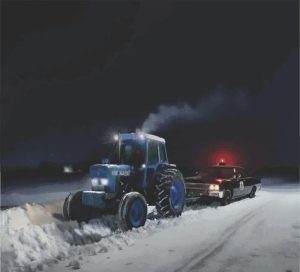 “I believe you were stuck in a snow bank at thirty below. High-speed turning manoeuvre you said. I believe you had to walk to a nearby farm to get assistance. It was supposed to have been a fifteen-minute walk. If you recall, after an hour I contacted your detachment to let them know I had not heard from you. Prefer if that doesn’t happen again.”
In the darkness of the interior of the patrol car, the constable’s face flushed with embarrassment.
“Ten four Saskatoon Radio, I would prefer that too.”
The radio operator wasn’t quite done.
“Four five seven, for the record, wasn’t it the lady of the farm house that started up her New Holland and pulled you out? I hope there were photos.”
Well, the operator had successfully exacted his toll.
“Saskatoon Radio, four five seven. I’m in enroute to detachment. Out.”
He could sense the laughter in patrol cars all over the sub division. He turned the police cruiser onto the main road and headed north, back to the detachment.
The cruiser was back on pavement when the driving rain began. The cruiser’s belted tires were prone to hydroplaning so he had to curb his impulse to push the vehicle’s speed. The blackness of the night, the pelting rain, the rhythm of the windshield wipers and the constant reflection of a centre line passing through the headlights’ beams were hypnotic. Navigating was becoming an exercise in combating the fatigue induced sensation of images on the road that were nonexistent. The deadly risk was the temptation to surrender to sleep. Nodding off behind the wheel.
Out in the murkiness up ahead, lights appeared without warning. Through the pelting rain obscured windshield, the image of a vehicle passed by moving in the opposite direction. The luminous dial on the constable’s Timex displayed 0205 hours. At this time of night, the surroundings normally reflected an empty darkened countryside of cultivated fields and native grasslands. Any vehicle traffic was suspect. He hit the brakes hard, and at the last moment turned the steering wheel to the right bringing the cruiser to an angled stop partially on the road’s shoulder. He followed this effort by rapidly wrestling the wheel to the left as far as it would go, then manhandled the gear shift into reverse and momentarily hit the gas. The vehicle accelerated a short distance in reverse across the width of the road. Then it was into drive, turn the wheel hard to the right and accelerate back down the highway in the opposite direction. Now he was headed in the same direction as the suspicious sedan, but well back. The manoeuvre is called a “Y” turn and it’s a bread-and-butter skill for any officer working patrol. Now he was looking for the taillights of the vehicle which had passed by him.
“Saskatoon radio, four five seven. Do you copy?” Silence.
“Damn.” The words were uttered between clenched teeth.
What a time for that new radio repeater to act up he thought. The tail lights were now visible in the distance and the cruiser was closing rapidly.
“Saskatoon radio, Outlook four five seven.”
Again, nothing.
“Come on.” The constable’s impatience was taking hold.
The radio crackled to life pushing away the fatigue and commanding attention.
“Four five seven, are you receiving? Saskatoon Radio here.”
Timing can be a fickle thing, erratic and aggravating. The timing of the radio’s sound was all of those but most assuredly now, very welcome.
“Saskatoon radio, four five seven. I’m receiving you loud and clear,” replied the constable.
The radio operator continued. “Four five seven, I guess the upgrades on our repeater are in need of some fine tuning. Likely the atmospheric harmonics are interfering.”
With a note of annoyance, the constable replied.
“Saskatoon radio, don’t know about any of that, but I do need your assistance. I’m about to stop and check a vehicle. We’re a long way from any communities or farms and this sedan is headed somewhere at a very late hour.”
“Ten four, four five seven. Details please.” All business now, the radio operator had adopted a solemn tone, ending any previous jocularity.
“Hold on Saskatoon radio. Pulling the vehicle over shortly. Stand by.”
The radio operator interrupted with a measured sense of urgency in his voice.
“Four five seven. This has just come over the teletype. A nineteen sixty-nine beige Chevy, Alberta plates, is being sought in connection with an armed robbery in Regina earlier today. Witnesses state that one man and one woman were involved in assaulting a Coop store manager, then taking the contents of two cash registers and forcing the manager to open the store’s safe. An undisclosed amount of cash was taken. The male suspect was described as being in his late teens or early twenties, medium to heavy build, approximately six-foot in height, wearing blue jeans, plaid shirt, blue ball cap and sunglasses. It was reported the male was brandishing a pump action shotgun. The female was described as having brown hair with a slight build, same age range as the male. No further description. Regina police responded, however the suspects had fled and were last seen heading north out of the city in the noted vehicle.”
The constable activated the cruiser’s roof beacon light, illuminating the night and casting flashing beams of red on the vehicle ahead. It was a beige 1969 Chevy sedan.
The driver in the sedan pumped the brakes, slowed and veered towards the shoulder, demonstrating compliance with the demand of the cruiser’s rotating beacon to pull over.
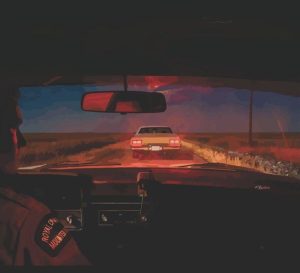 In anticipation of the move, the constable steered the patrol car into position directly behind the sedan then came to a stop. The Chevy was now fully visible in the cruiser’s headlights. The rain had stopped.
The time was 0215 hours.
The annoying screech of the worn windshield wipers traversing across wet glass could be clearly heard inside the cruiser’s interior.
The constable keyed the radio’s mike.
“Saskatoon Radio, four five seven”. “Do you copy?”
Through the sedan’s rear window, the constable could make out the silhouettes of two persons in the front seat. The shapes suggested the passenger was female. The vehicle’s licence plate was registered in Alberta.
“Four five seven,” Saskatoon radio responded. “I copy you.”
“Saskatoon radio, this vehicle is a beige 1969 Chevy sedan and it has two occupants. One appears to be female. Please run the following Alberta plate.”
The constable took a moment to write down the sedan’s plate information on the clipboard beside him as he concurrently gave that information over the radio. If he didn’t make it back to the cruiser, perhaps the clipboard would tell a story.
“Four five seven, Saskatoon Radio. The response on that plate may take a moment.”
“Saskatoon Radio, I’m going to proceed anyway. I’ll get back to you as soon as I’m done.”
Cpl. Walters, the constable’s driving instructor from his training days suddenly intruded into his Thoughts.
“Recruit, remember one of the most dangerous things you will ever be required to do as a police officer, is the routine check of a vehicle which you have directed to pull over to the roadside. As you approach the vehicle, the occupants of said vehicle may be preparing to do you harm. You could be the only thing standing between them and jail time. If you are not completely focused on who is in the vehicle and what they are doing at all times, you may become a statistic. You have a very short period of time to assess what is in front of you. Ten paces, more or less, between your door and the driver’s door of the subject vehicle, that’s all you have. Pay Attention.”
The constable opened the cruiser’s door, keeping his flashlight focused on the Chevy’s interior. As he took the first step, he could see that the passenger was animated, talking to the driver.
Cpl. Walter’s words were clear.
“Make certain that you’ve put the police vehicle in park. You don’t need the tax payer’s property heading down the road without a driver causing all kinds of havoc, all because you were nervous or inattentive. When you step out of the door keep your eyes on the stopped vehicle in front. Don’t trip over your feet.”
Cpl. Walter’s rasping voice continued.
“Remember recruit, at this moment you have to be completely attentive to the job at hand. By now you should have memorized the licence plate, the make, model and year of the vehicle. Watch the occupants. How many are they? Where are they positioned? Are they turning to look at you?”
Cpl. Walter’s voice persisted.
“Now you are entering what I refer to as no man’s land. You’re in front of the cruiser’s headlights, but still located to the rear of the stopped vehicle. They can see you. Perhaps better than you can see them. Find the driver’s left rear-view mirror. You should be able to see his reflection. Is he looking at you?”
The constable continued his approach of the sedan, while again recalling the corporal’s instructions.
“You’re committed now. You’re too far from the cruiser to avoid physical confrontation if the occupants exit quickly meaning to do you harm. You can’t radio for help. Everything depends on what you do next.”
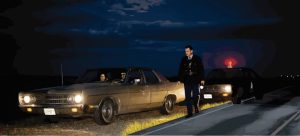 The driver was slightly slouched and stationary; his eyes seemingly fixed on the constable’s reflection in the side mirror. The passenger however was definitely leaning over the back of the front seat and appeared to be focused on something in the rear seating area. The constable slowly, discreetly, unfastened the flap on his holster.
He was abreast of the Chevy’s rear taillight now, with more than half the distance of the journey to the driver’s door completed. He could see that the passenger was a female with brown shoulder length hair. The driver’s eyes now alternated between the mirror and his passenger. In an instant the driver quickly straightened and sat up, attentive and waiting. He then wound down the window.
Cpl. Walter’s voice resonated with authority.
“The occupants have now had time to prepare for you. If there’s a weapon, they’ll have it between them or in their laps. They have also had time to collaborate. One of them will be in charge and will signal to the other when the time comes, if they intend to take action. Watch for it.
Remember that your first line of defence is your authority represented by your uniform, the second is your command of the moment, assertively use your voice and body language. Your third is your flashlight. Use the beam to distract and the body as a baton if it comes to that. If, and only if you perceive a life menacing threat, go to your sidearm.”
The driver was a young man, late teens or early twenties. He looked up into the flashlight’s beam, then away, shielding his eyes from the intensity of the light.
“Good evening officer. Was I exceeding the speed limit?”
The constable was aware of the question, but his focus was entirely directed at any indication of aggression exhibited by either person. The passenger, a young woman, had bent forward and was turned slightly, looking past the driver towards the constable. She smiled, albeit nervously. The constable’s right hand rested lightly on his holster. His left arm was bent at the elbow holding the flash light at ear level, slowly scanning the vehicle’s interior.
“No, not speeding. A routine stop. Your licence and registration please.”
The constable was wary, fully focused on each movement as the driver raised himself up with the steering wheel to reach into his rear pocket. After taking hold of his wallet, the driver extracted two items and handed them through the open window to the constable. The passenger had a small shoulder bag in her lap, from which she removed a laminated card. She passed the card to driver, who then handed it to the constable.
The driver spoke.
“It’s her university student card.”
The constable examined the items and took a moment to reflect on the information.
“It’s late and there’s usually very little traffic here at this time of night. Would you mind telling me where you’re headed?”
While speaking he directed his flashlight at the backseat. It was occupied with what appeared to be books and pads of writing paper. He caught sight of a book cover. “Calculus for Engineering”.
The constable’s physical stance relaxed. “Looks like heavy going,” he said.
The young woman seemed eager to offer an explanation.
“Engineering, third year. I’m cramming for exams. Reading by flashlight isn’t ideal but the drive is long and not much of a distraction tonight. I’ll be happy to have it behind me. Looking forward to time on the farm.”
The driver interrupted.
“I’m headed home to my dad’s farm. We’re on break. This is my girlfriend. He paused and smiled shyly, “I should say, my fiancé. We had a late start from Edmonton, so we decided to push through. My dad needs help with seeding and he’s expecting me.”
The constable finished inspecting the driver’s credentials and handed them back.
“I was just at your father’s place, or rather out on his west section where his crew is working. He mentioned you were on the way.”
The young man’s face took on a concerned look. “Is everything all right?”
The constable smiled and in a reassuring tone said, “Yes, everything is fine. Your father is needed to help out with a court case in Saskatoon.”
The driver’s disposition calmed and it was reflected in his voice.
“That’s a relief. We have a surprise for him and I wouldn’t want him in a poor frame of mind.”
The constable looked at his watch, aware that the radio operator would be waiting to hear from him.
“I’m sure your father will be pleased to see you. I had better be on my way. Drive carefully, there’s fog further down the road. Goodnight.”
As the constable stepped back to return to his patrol car, the young man shared a last bit of information.
“I hope you’re right about my dad’s mood. He hasn’t met my fiancé yet and we’re going to break the news to him. Goodnight Constable.”
The constable paused to keep watch as the couple’s vehicle slowly drove onto the pavement, then accelerated into the night. As he walked back to his car, he reflected on what Cpl. Walter’s might have said about this traffic stop? He most assuredly would have found some fault.
Once inside the cruiser he started the ignition and put the vehicle in gear, grateful to have his shift ending on a positive note. Ah well, we’ll do it all over again tomorrow night he thought to himself, rather sarcastically. He removed his cap and reached for the mike.
“Six seven Saskatoon Radio, four five seven.”
“Four five seven, Saskatoon Radio here. Everything go well?”
“Ten four, you might say better than expected. A couple of university kids on their way home with a surprise for a parent.”
“Surprise? Good marks I would hope.” The operator chuckled. “Not exactly. A story for another night shift.”
“Four five seven, Saskatoon Radio, I have an update on the Regina robbery.”
“Go ahead six seven.“
“The suspects were apprehended outside of Moose Jaw at 0200 hours after a short high-speed pursuit. No injuries or shots fired.”
“Thanks, six seven, that’s good news.”
“Four five seven, please advise when you arrive back at detachment. We’re still on the clock.”
“Will do six seven. By the way, didn’t your shift end a while ago?”
The constable’s question was met with a pause.
“Ah…yes. Thought I would stick around to see how things worked out.”
Now it was the constable’s turn to pause. He recalled being fresh out of training by a little more than a week when the sergeant appeared at the beginning of the constable’s inaugural solo night shift.
 “So, this will be your first shift working alone,” The sergeant’s words had a serious tone. “We do a lot of one man shifts and patrols here, it’s the nature of the work. Has been that way since the founding of the Force. Stay on your toes and don’t become complacent.”
The sergeant had more to say.
“One more thing. You’re not alone out there. Make sure you regularly check in with the radio operator in Saskatoon Sub Division. He’s your lifeline, even when you don’t think you need him.”
Hours after his shift officially ended and still on the road, the constable watched as dawn began to lighten the sky. He was approaching the South Saskatchewan River bridge, a few minutes west of Outlook.
The police radio interrupted the constable’s concentration as he navigated the approach to the bridge and its narrowing lanes.
“Four five seven, six seven Saskatoon radio.”
“Six seven, four five seven, go ahead.”
“Are you getting close to the detachment?”
“That’s affirmative. Five more minutes.”
“I’m relieved to hear that, four five seven. I’m going off shift. Time to go home.”
The constable reflected for a moment, recalling the sergeant’s words… “not alone”. He pressed the transmit button, “Brian, before we wrap this up…thanks.”
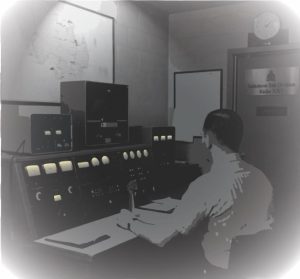 “Ten four, four five seven. Six seven Saskatoon Radio, out.”
Epilogue
In January of 1974, Brian King became a Special Constable then later that same year completed his transition to a Regular Member of the RCMP. As providence would have it, he was posted to his former location, Saskatoon. One can imagine that the faces and sounds in the hallways of Saskatoon Detachment were both familiar and at the same time new.
Brian King was no longer manning the sub division radio, watching over rookies and veterans alike.
Constable King was now one of that group of front-line rank and file officers serving subpoenas, conducting late night patrols, and keeping watch over the citizens of his province.
Today, number 156 marks Constable Brian King’s place on the RCMP Role of Honour, killed on duty, 25 April 1978.
Please note
This is a work of literary non-fiction. It is based on recollections and reflections of first-hand, real-life events which took place fifty-two years ago. Any errors or omissions are the sole responsibility of the author.